
Created 18 June 2026
Sankt Hans traditions in Denmark
Take a look at our guide to those unfamiliar with Sankt Hans traditions in Denmark
The days are getting longer and warmer, and summer is finally upon us. One of our most beloved Summer traditions in Denmark is the celebration of 'Sankt Hans' – also known as 'Midsummer’s Eve' in some European countries or 'Saint John's Eve' in English.
Take the opportunity to dive into Danish culture and experience the cultural phenomena of Sankt Hans.
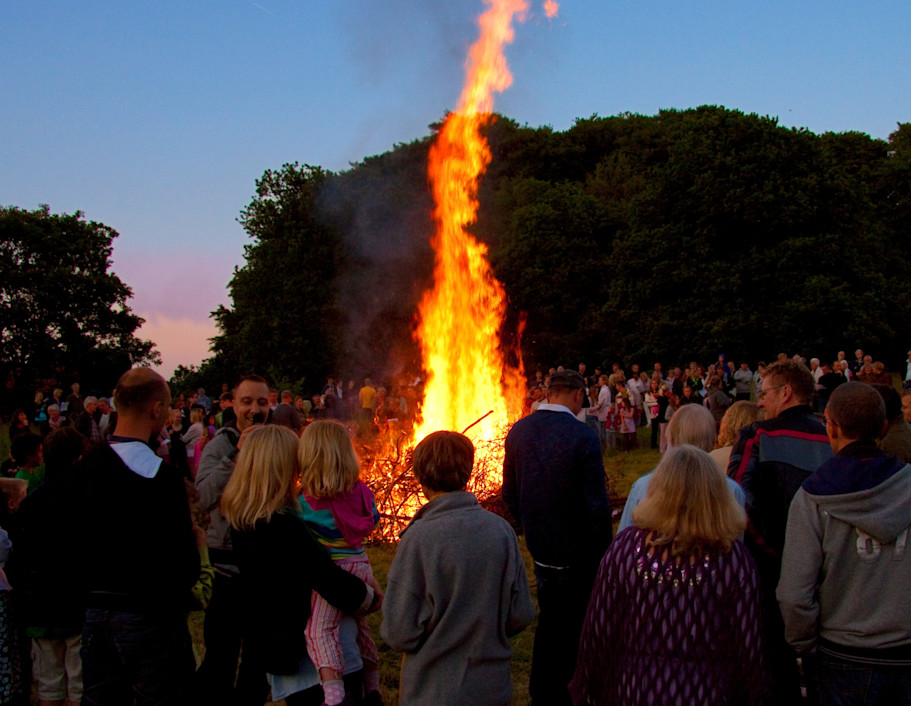
Why do we celebrate Sankt Hans in Denmark?
The celebration of Sankt Hans is tied to Christianity.
Before Christianity was introduced to Denmark, Vikings used to celebrate 'Midsummer' or ‘Summer Solstice’ on June 21st, which is the longest day of the year with 17 hours of daylight. As Christianity became a part of the Danish culture, the celebration changed to align with Christian symbolism.
Hans – which is short for 'Johannes' in Danish and 'John' in English – was a biblical saint, who was said to have been the cousin of Jesus Christ and baptized him in the Jordan River. Sankt Hans is a celebration of Hans, and it is always celebrated on June 23rd, which is both the evening before Hans' birthday (June 24th) and 6 months before the birth of Jesus and Christmas.
The celebration was meant to celebrate the transition into something new, as well as a “warning” of the dark days that are to come, as the days are getting shorter. Nowadays, the celebration is more about community and fun than Christian values.
Festive activities during Sankt Hans
The celebration of Sankt Hans used to entail pagan rituals, as that time of the year was said to have an extra high level of supernatural magic. The participants therefore lit bonfires to ward off evil spirits and protect themselves against the coming darkness.
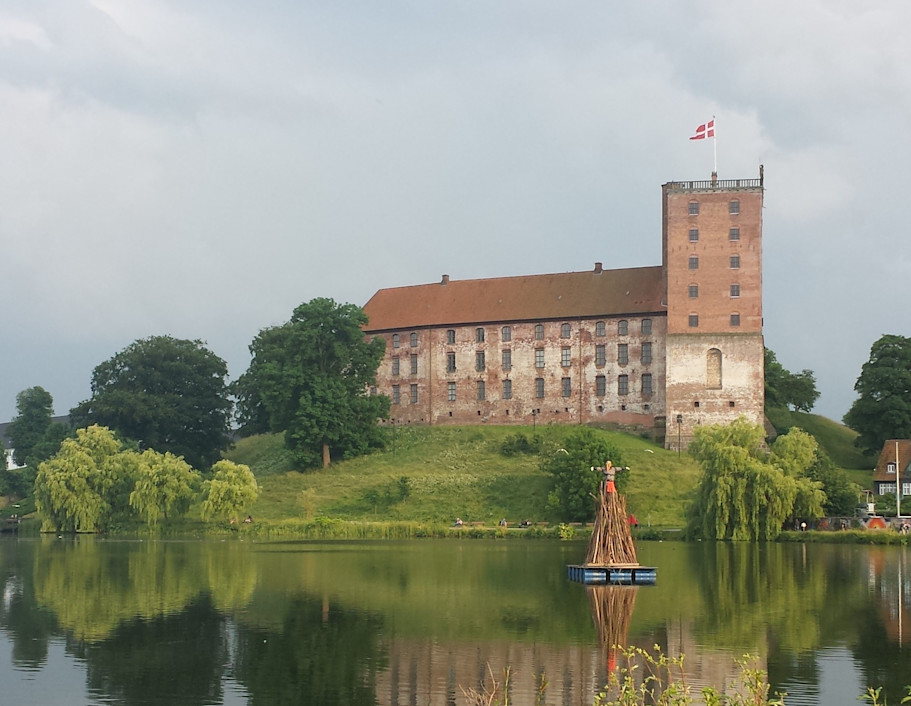
A controversial part of the bonfires was the burning of witches – or people believed to be witches. By burning witches, the participants believed they were literally burning evil, and some even believed they were setting the witches free. A person has not been burned on the bonfire since the 1920’s, but the tradition of a wooden witch figure is still prominent in Denmark.
Most cities host big, public bonfires in celebration of Sankt Hans, where you can tag along and enjoy the festive evening. The celebration is usually accompanied by a traditional Danish song called “Vi Elsker Vort Land” by Holger Drachmann, which directly translates to “We Love Our Country”.
Definitely check out Kolding Fjord, Slotssøbadet, and Geografisk Have for events in Kolding.
Public holidays during Sankt Hans
Even though Sankt Hans is widely celebrated in Denmark, it is not viewed as an official public holiday. Stores are therefore not closed, as it is with other festive holiday traditions such as Easter and Christmas, and most people have to work the day after.
Unlike other Danish holidays, Sankt Hans is always celebrated on June 23rd.